
Department Materials Chemistry for Catalysis
News and Science Highlights
2026
Science Highlight
Materials chemistry shapes the future of catalysis
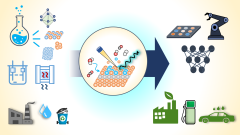
In a recent mini-review published in Angewandte Chemie (Wiley), researchers from the Department of Materials Chemistry for Catalysis at Helmholtz-Zentrum Berlin provide a critical perspective on the fundamental role of synthetic materials chemistry in shaping electrocatalytic performance.
The article examines how synthetic strategies govern key catalyst attributes—including phase, composition, crystallinity, defect structure, oxidation state, morphology, conductivity, and local coordination environments—which ultimately determine catalytic activity, selectivity, stability, and reaction pathways. Particular emphasis is placed on the dynamic nature of electrocatalysts, highlighting that the catalytically active phase frequently emerges through in situ reconstruction under operating conditions rather than existing in the as-synthesized state.
The review further discusses how advances in operando characterization, data-driven materials discovery, and autonomous experimentation are transforming catalyst synthesis from an empirical process into a predictive science. By establishing direct links between synthesis, structural evolution, and catalytic function, the work provides a framework for the rational design of next-generation electrocatalysts and offers insights into future directions at the intersection of chemistry, advanced analytics, automation, and artificial intelligence.
News
Dr. Menezes Visits REVA University for the 8th Research Conclave
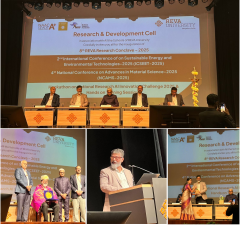
Dr. P. W. Menezes, head of the department, participated in the 8th Research Conclave at REVA University, Bengaluru, India. He inaugurated the conclave as Chief Guest and delivered the inaugural lecture, highlighting key challenges and opportunities in sustainable energy research.
During the event, Dr. Menezes also served as an expert panelist in discussions on hydrogen generation and its applications, and engaged with students and faculty on topics related to energy transition and catalytic materials. He met with Dr. P. Shyama Raju, Chancellor of REVA University, to discuss avenues for academic and research collaboration. The visit reflects the commitment of Helmholtz-Zentrum Berlin and the Helmholtz Association to international scientific exchange and collaboration in sustainable energy research.
Science Highlight
Electrochemical Carbon Dioxide Reduction to Methanol on Copper-Based Catalysts
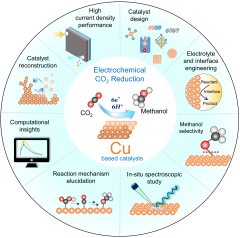
In a recent review published in Advanced Materials (Wiley), researchers from Helmholtz-Zentrum Berlin and the University of Cape Town, within the framework of the GreenQUEST project, present a comprehensive and critical assessment of copper-based catalysts for the selective electrochemical reduction of carbon dioxide to methanol. The article provides an integrated perspective that bridges fundamental electrocatalytic insights with applied considerations essential for technological deployment. The review systematically elucidates the dynamic nature of active sites under reaction conditions, emphasizing the role of catalyst reconstruction, oxidation-state evolution, and interfacial effects in governing methanol selectivity. Key reaction pathways and mechanistic descriptors are discussed in the context of structure–activity relationships, drawing on recent advances in operando and in situ spectroscopic techniques. Beyond catalyst design, the work extends to reactor engineering strategies, electrolyte effects, and mass-transport considerations that critically influence performance metrics. Importantly, the authors connect fundamental understanding with techno-economic and system-level analyses, outlining challenges and opportunities for scaling electrochemical CO₂-to-methanol conversion using renewable electricity. This integrated framework aims to guide the rational design of next-generation catalytic systems and accelerate the development of commercially viable, sustainable methanol production technologies.
2025
Science Highlights
Electrocatalysis with dual functionality – an overview
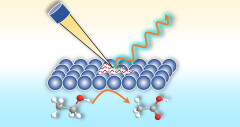
Hybrid electrocatalysts can produce green hydrogen, for example, and valuable organic compounds simultaneously. This promises economically viable applications. However, the complex catalytic reactions involved in producing organic compounds are not yet fully understood. Modern X-ray methods at synchrotron sources such as BESSY II, enable catalyst materials and the reactions occurring on their surfaces to be analysed in real time, in situ and under real operating conditions. This provides insights that can be used for targeted optimisation. A team has now published an overview of the current state of knowledge in Nature Reviews Chemistry.
News
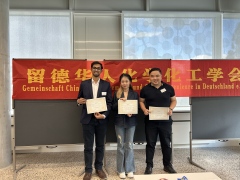
Dr. Hongyuan Yang Receives 2025 CGCA Young Researchers Award
We are proud to announce that Dr. Hongyuan Yang has been honored with the 2025 CGCA Young Researchers Award for his outstanding contributions to catalysis and energy research.
Congratulations to Dr. Yang on this well-deserved recognition!
News
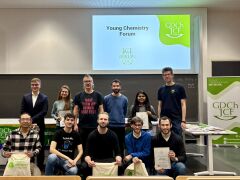
Congratulations to Basundhara for winning 🥈 in the three Minute Thesis (3MT) at Freie Universität Berlin competition for her fascinating OER project.
News
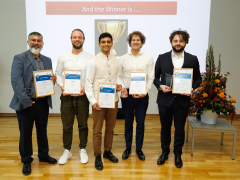
TT-Award 2025: Second place was awarded to the ClearWater project
Congratulations to the winning teams: Second place was awarded to the ClearWater project led by Carsten Walter and Prashanth W. Menezes. ClearWater extends the traditional water purification stages - coagulation, aeration (aeration) & sedimentation and filtration & disinfection - to include the process of photocatalysis. The third prize was awarded to Michele Segantini's team for the development of a miniaturised and portable quantum sensor for detecting free radicals in various industrial applications. The potential applications are diverse, for example in foods such as beer and olive oil, but also in batteries, lubricating oil and pharmaceutical products.
News

Prashanth Menezes awarded prestigious VAIBHAV Fellowship by Government of India
The Ministry of Science and Technology, Government of India, has announced the recipients of the Vaishvik Bhartiya Vaigyanik (VAIBHAV) Fellowship, a flagship initiative aimed at fostering collaboration between the Indian STEMM (Science, Technology, Engineering, Mathematics, and Medicine) diaspora and leading research institutions in India. Among the 2025 awardees is Dr. Prashanth W. Menezes, Head of the Department of Materials Chemistry for Catalysis at Helmholtz-Zentrum Berlin (HZB).
Science Highlight
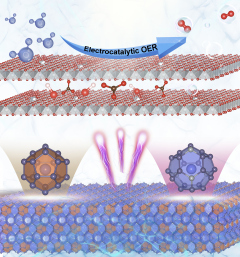
Green hydrogen: A cage structured material transforms into a performant catalyst
Clathrates are characterised by a complex cage structure that provides space for guest ions too. Now, for the first time, a team has investigated the suitability of clathrates as catalysts for electrolytic hydrogen production with impressive results: the clathrate sample was even more efficient and robust than currently used nickel-based catalysts. They also found a reason for this enhanced performance. Measurements at BESSY II showed that the clathrates undergo structural changes during the catalytic reaction: the three-dimensional cage structure decays into ultra-thin nanosheets that allow maximum contact with active catalytic centres. The study has been published in the journal ‘Angewandte Chemie’.